First 48 Hours
What to Do After a House Fire
What to do after a house fire comes down to order. Get everyone safe and stay out until the fire department clears the house. Report the claim and ask for the fire report. Photograph everything before anything is moved. Protect the property from further damage and keep every receipt. Throw nothing away, and sign nothing on the spot.
The First 48 Hours. What to Do, in Order.
- No upfront cost
- You always have final say on any settlement
- CA DOI License No. 6015234
- No upfront cost
- You always have final say on any settlement
- CA DOI License No. 6015234
§ 01
House Fire Checklist: The First 48 Hours
Ten steps, in the order they matter. The first line of each is the checklist. The rest tells you who to call, what to shoot and what to keep. Losing a home to fire is a shock. Nobody expects you to remember all of this, so print it.
-
FEMA’s fire administration puts it plainly: don’t enter until the fire department says it is safe. Floors and walls may not be as safe as they look. Don’t turn the gas, power or water back on yourself. If you need a bed tonight, call the Red Cross. Have your pets checked by a veterinarian, because smoke can damage their lungs.
-
Call your insurer or agent right away and ask what to do first. Then confirm the call by email. California’s standard fire policy asks for written notice of a loss “without unnecessary delay.” Ask the fire department for the incident report number. Request a copy of the report and send it to your insurer.
-
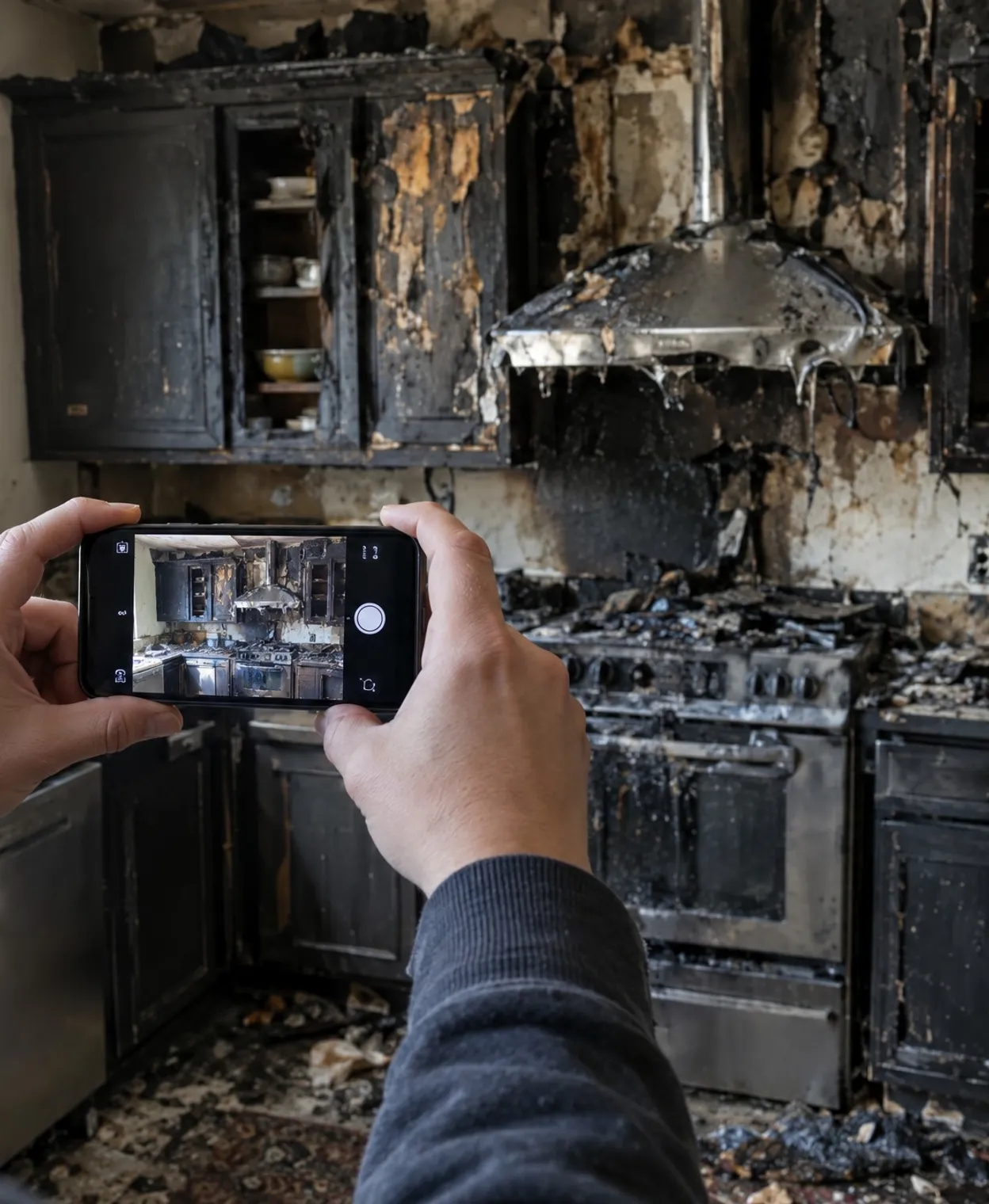
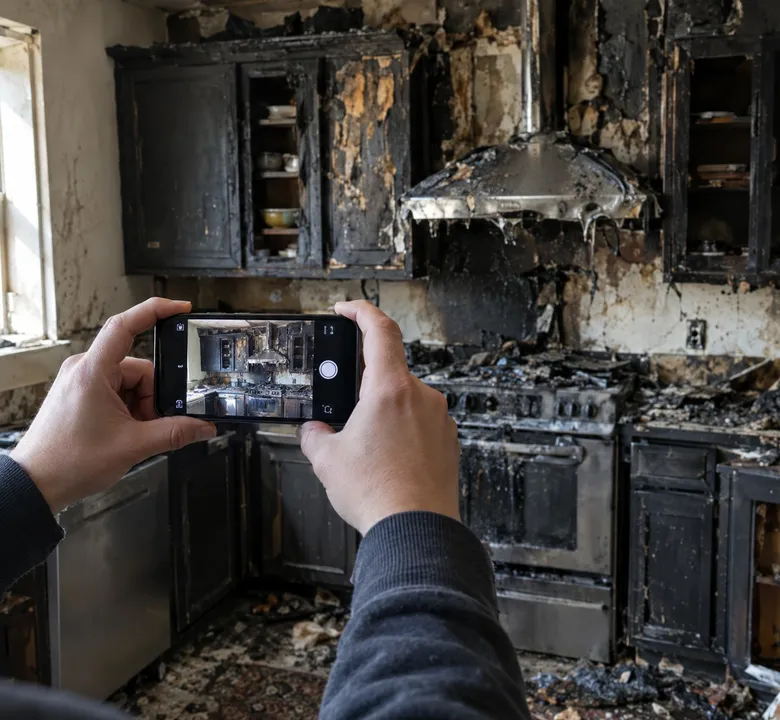
Shoot every room from every angle, outside and in. Get the smoke and soot on surfaces that look clean, because that damage is easy to miss. Film your belongings where they sit. Serial numbers and purchase dates make the contents list easier to prove later.
-
Under California’s standard fire policy, protecting the property from further damage is your job. Board up broken windows and doors. Cover any hole in the roof. If the house will sit empty, tell the police it’s vacant. Keep the invoice for every board, tarp and emergency repair, since your insurer may reimburse them.
-
The policy can require you to separate damaged from undamaged belongings and show the insurer what remains. A ruined sofa is still evidence. The Red Cross says food, medicine and hygiene products exposed to the fire should go. Photograph them and list them first.
-
The California Department of Insurance says to demand identification from anyone who contacts you about your claim. Ask to see the adjuster’s California license and write down the number and full name. A business card proves nothing. Look the number up in the License Number Search on the Department of Insurance website before you sign. In California, you may cancel a public adjuster contract within three business days of signing and receiving it, or five calendar days in a declared catastrophic disaster area.
-
If the fire is a covered loss, your policy may pay the extra cost of living elsewhere. Ask your insurer for an advance on living expenses. Keep receipts for meals, lodging and purchases from the day of the fire, plus a running log of what you spent. More on additional living expenses.
-
Ask in writing. After a covered loss, California law requires your insurer to send a free, complete copy of the policy in force on the day of the fire. That includes the declarations page and every endorsement. The insurer has 30 calendar days from receiving your request.
-
Write down who you spoke to, the number you called, the date and time, and what was said. Confirm agreements, disputes and deadlines in writing, by letter or email. A California insurer has 15 calendar days to respond to a communication that calls for an answer. Your log shows when the clock started.
-
You don’t have to accept the insurance company’s contractor or its estimate. Get your own written estimate. Fire damage hides. Water from the hoses soaks insulation and subfloor. Heat breaks down the sheathing on wiring inside the walls. Smoke travels into ductwork. If it isn’t measured before the walls are closed, it isn’t in the claim.
Los Angeles house fire, full strip out: Offered $38,000. Settled at $276,000.
Results reflect specific losses and policies. Past results don’t guarantee a similar outcome.
§ 01
What We Do in the First 48 Hours
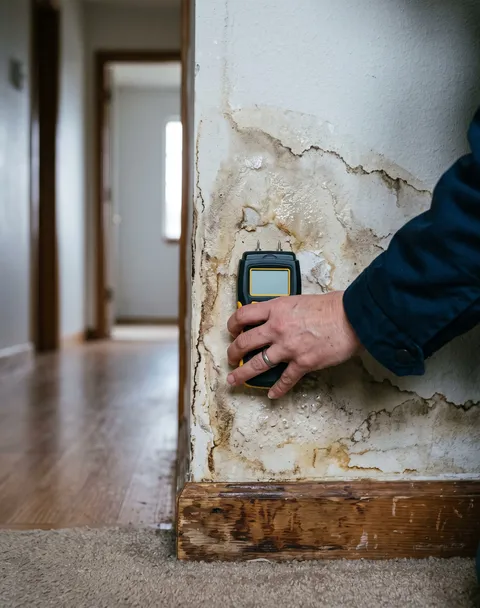
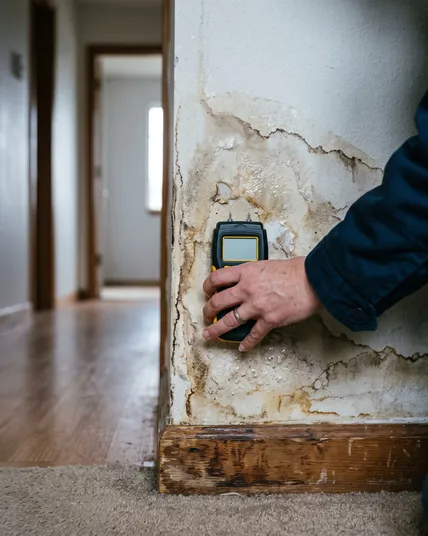
A senior adjuster leads every claim, from the first call to the final settlement. We read the whole policy, endorsements included. We measure the loss before the carrier’s estimate sets the number. That can mean moisture mapping where the firefighting water went, or an industrial hygienist where smoke reached.
Smoke damage: Offered $17,000. Settled for about $1.1 million. An industrial hygienist proved combustion byproducts in the porous materials and doors.
We attend the inspections. You approve the claim package and decide on every offer. We represent the insured only. Calls are returned the same business day, Monday to Friday, 9 AM to 5 PM Pacific.
Results reflect specific losses and policies. Past results don’t guarantee a similar outcome.
Papers, Cards and Burned Cash
FEMA’s after the fire guide lists the records most people need to replace:
- Driver’s license and auto registration
- Passports, birth, marriage and death certificates, and citizenship papers
- Social Security and Medicare cards
- Titles and deeds, wills, insurance policies and income tax records
- Credit cards. Call each issuer to report them lost in the fire.
- Medical records and warranties
Burned money can often be replaced. Handle it as little as possible and wrap each bill in plastic. If half or more of a bill is intact, your regional Federal Reserve Bank can replace it. Badly damaged notes go to the Bureau of Engraving and Printing, which redeems them as a free public service.
What to Do After Water Damage in the House
The same order works when the loss is water, not fire. After a fire, the water used to put it out is a loss of its own.
- Shut off the water at the main or the fixture.
- Photograph and video every wet room before anything is dried or torn out.
- Start drying right away. The EPA says to dry water damaged areas and items within 24 to 48 hours to prevent mold growth.
- Keep every receipt for fans, dehumidifiers and emergency repairs.
- Don’t throw out wet drywall, flooring or contents until they’re documented.
What to Do After a House Fire: Insurance Rules in California
California sets the clock for both sides. Within 15 calendar days of your notice, your insurer must acknowledge the claim, send the forms and instructions, and begin its investigation.
Your side has deadlines too. The standard fire policy gives you 60 days after the loss to send a signed, sworn proof of loss, unless the insurer extends the time in writing. A lawsuit over the claim must be filed within 12 months of the loss. If the loss is tied to a declared state of emergency, that becomes 24 months. Ask for any extension in writing, and keep the letter.
When You May Not Need Us
A small kitchen fire with a fair offer may not need a public adjuster. On a loss that size, our fee may outweigh what we add. We’ll tell you so at the free review, before you sign anything.
No upfront cost. We’re paid a percentage of what we recover.
Questions About the First 48 Hours
When can I go back into my house after a fire?
Only when the fire department says it is safe. Floors and walls may not be as safe as they look. Once inside, don’t turn the gas, power or water back on yourself.
Will insurance pay for a hotel after a house fire?
Often, if the fire is a covered loss. Your policy’s loss of use coverage may pay the extra cost of living elsewhere, up to its limit. Ask your insurer for an advance, and keep every receipt from the day of the fire.
Should I clean up before the insurance adjuster comes?
Protect the property, but don’t clean it out. Board up openings and stop water from spreading. Leave damaged items in place, photographed and listed, so the insurer’s adjuster sees the loss as it is.
Do I have to use my insurance company’s contractor?
No. You don’t have to accept the insurer’s contractor or its estimate. Get your own written estimate from an independent professional, and compare the two line by line.
Should I hire a public adjuster after a house fire?
It depends on the size of the loss and how far apart you and the insurer are. A public adjuster works for you, reads the policy, measures the loss and negotiates the claim. Call before the first estimate is final and before anything is thrown away. If we can’t add value, we’ll say so at the free review.
Call Before the Carrier Sets the Narrative.
Your insurance company has an adjuster protecting their interests. You have the right to one too.
- Monday to Friday, 9 AM to 5 PM Pacific
- We represent the insured only.